
No Body No Problem Maps and Locations
No Body No Problem maps: a small apartment, a crowded shop, a multi-storey car park, and a suburban house with a backyard. Learn the hiding logic per layout.
Quick answer: No Body No Problem uses four location types: a small apartment, a crowded shop, a multi-storey car park, and a suburban house with a backyard. The apartment is tight and fast, the shop is cluttered, the car park is open and echoey, and the suburb adds outdoor hiding spots plus a day/night option. The exact map names and the full launch roster have not been published.
The maps are not just backdrops. Each layout changes the carry route, the noise level, and the number of containers a cop has to check. Learning the layout is more useful than memorizing one hiding spot.
The four confirmed location types
| Location | Layout | Best for suspects | Best for the cop |
|---|---|---|---|
| Small apartment | Few rooms, short halls | Fast carries, close containers | Tight sightlines, quick clears |
| Crowded shop | Shelves, counters, stockroom | Clutter, many hiding places | Lots of places to check |
| Multi-storey car park | Levels, ramps, vehicles | Vehicle concealment, vertical routes | Echoes, long sightlines |
| Suburban house | House, yard, shed, pool | Outdoor spots, day/night | Fences, windows, long views |
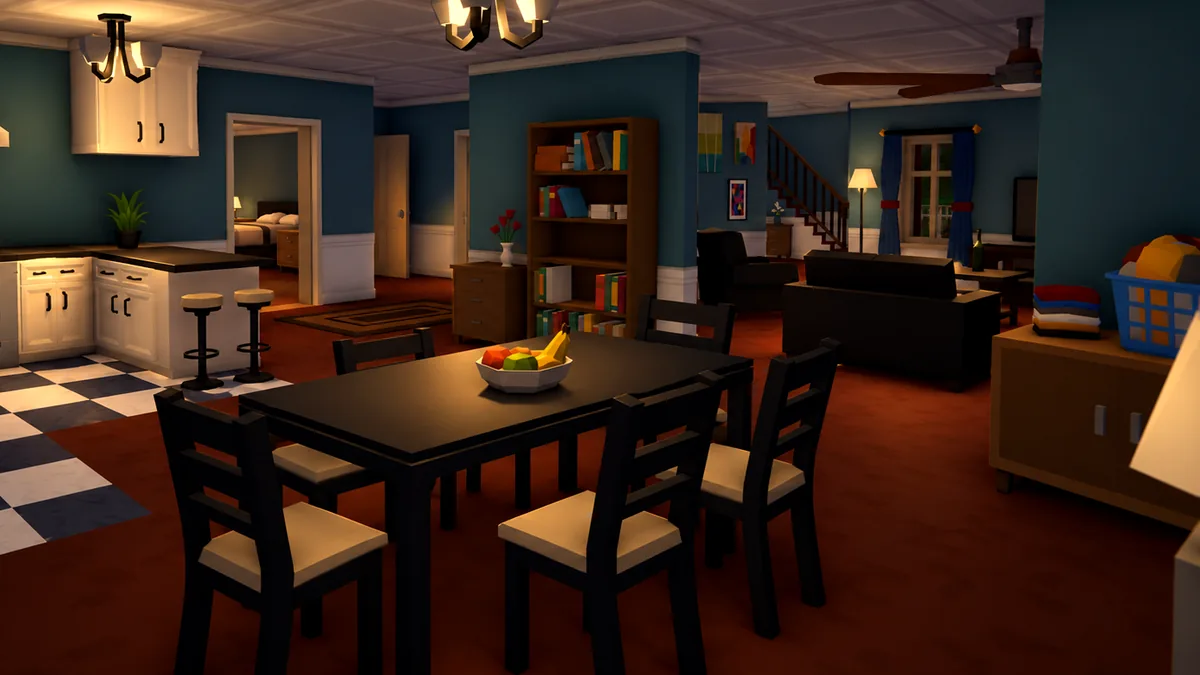
The store description names the first three directly. The suburban house is the October 2026 addition, described in the official news post with white picket fences, backyards, a grill, bushes, a pink flamingo, and a day/night option.
The apartment
The apartment is the smallest layout. That makes it the best place to learn the loop: short carries, obvious containers, and a cop who can clear the space quickly.
Hiding logic: use the bedroom closet or the space behind the couch. The bathroom and balcony are weaker because they are easy to clear or visible from outside.
Carry logic: the body rarely has to travel more than a room. The risk is not distance; it is being seen through an open doorway.
Cop logic: clear the entrance, check the closet, and watch the hallway. The apartment punishes a cop who walks past a closed door.
The crowded shop
The shop is a clutter map. Shelves, counters, and stock create sightline breaks, which helps a carrier who knows the staff areas.
Hiding logic: the stockroom is the strongest enclosed spot. A low shelf or a counter is faster but more obvious.
Carry logic: the public aisle is exposed; the back room is safer but may be locked or occupied. Learn which doors the staff can use.
Cop logic: the shop has more containers than the apartment, so the cop has to prioritize. Check the stockroom early, then work the public floor.
The multi-storey car park
The car park is the noise map. Hard surfaces, open levels, and vehicles create echoes that carry.
Hiding logic: a car trunk is fully enclosed but obvious. The space between cars is partial concealment. The stairwell is high-traffic and loud.
Carry logic: use the ramp rather than the stairs. A body on stairs is a physics problem and a noise problem.
Cop logic: sound tells you where to go, but it also tells the suspects where you are. Move deliberately and check the vehicles near the ramp.
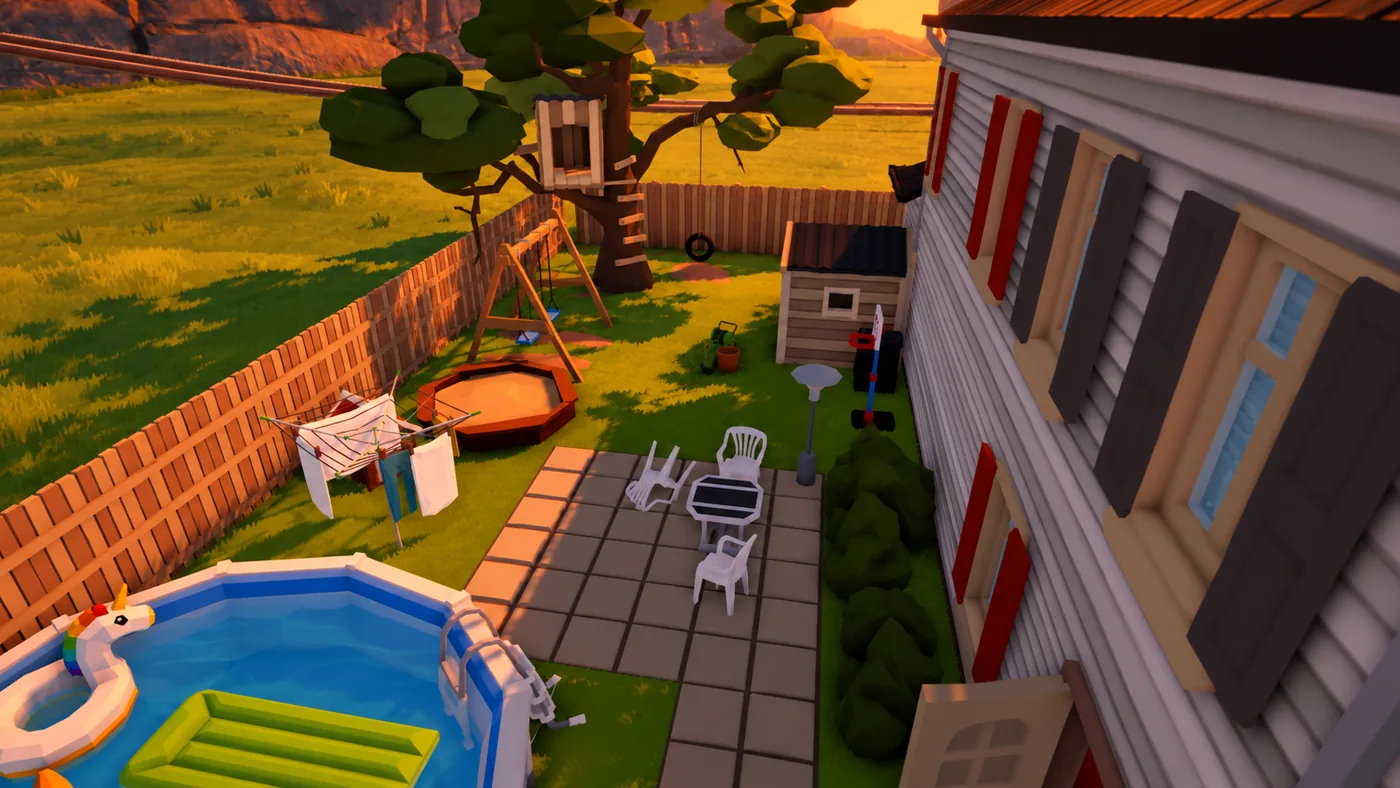
The suburban house
The suburb is the outdoor map. It has the most varied hiding spots and the most exposure.
Hiding logic: the shed, the grill, the bushes, the pool, and the treehouse are all candidates. The official news post names the grill, the bushes, and the pink flamingo; the screenshots show the shed and the treehouse.
Carry logic: the yard is open. A body carried across the lawn is visible from the house, so use fences and walls as cover.
Cop logic: the yard has long sightlines. Check the shed and the grill first, then walk the fence line.
The day/night option changes the math. The official post says night makes hiding easier, while daylight exposes everything. A night round rewards a slow, careful carry; a day round rewards speed and cover.
How to learn a map fast
Do not try to memorize every container on the first round. Learn three things:
- The nearest container to the body's spawn. That is your emergency spot.
- The cop's likely entrance. That is the route you avoid.
- The fallback container. That is the spot you use when the cop checks the first one.
After two rounds, add the outdoor routes and the noise sources. After four, you will know which rooms are worth cleaning and which are not.
In the first 30 seconds, one suspect should scout the route while the others stay with the body. The scout's job is to find the container and the cop's entrance, not to carry.
What the maps do not confirm
The store does not publish a full map list, official map names, or a map selection screen. The four location types are confirmed, but the launch roster may include more. Do not treat a fan wiki's map count as official.
The same applies to the "somewhere different" line in the store description. It is a joke about the game's variety, not a confirmed fifth map.
A team that knows every container but never agrees on a route will still lose. The hide body strategy→ page covers the route plan.
Official source: No Body No Problem on Steam ↗
Official source: Suburban map announcement ↗
Official source: PlayStation Store concept page ↗
FAQ
How many maps are in No Body No Problem?
Four location types are confirmed: apartment, shop, car park, and suburban house. The full launch roster has not been published.
What is the new map in No Body No Problem?
The October 2026 news post added a suburban house with a backyard, including a grill, bushes, a shed, and a pool area.
Do the maps have day and night versions?
The suburban map supports a day/night option, according to the official news post. Day and night change how easy it is to hide.
What is the best map for beginners?
The apartment. It is small, the containers are close, and the round is easy to learn.
Are the map names official?
No official map names have been published. The location types are described in the store material, but the names may change at launch.
More No Body No Problem Wiki Guides
No Body No Problem Clean Evidence Guide
How to clean evidence in No Body No Problem: work backward from the body, clean the carry route, avoid the fresh-patch tell, and leave the room looking normal.
No Body No Problem Co-Op: Friends and Private Lobbies
No Body No Problem co-op is online four-player play with three suspects working together against one cop. Private codes and role rotation help a group.
No Body No Problem Controls and Keybinds
No Body No Problem controls: 1-5 select hand, knife, gun, handcuffs, and UV light; G drops, H grabs the radio, V talks, B emotes, and hold to cuff.
No Body No Problem Cop Guide
How to play the cop in No Body No Problem: search the edges, read doors and clean patches, use the UV light and cuffs, and pressure suspects without guessing.
No Body No Problem Demo: What Happened
A free No Body No Problem demo was announced on October 16, 2026, but its Steam page is not reliably visible now. Here is what the demo showed and how to check.
No Body No Problem Gameplay Explained
No Body No Problem gameplay is physics-based social stealth for four players: three suspects hide a body while one cop reads the scene. Here is the loop.
No Body No Problem Hide Body Strategy
A practical No Body No Problem hide body strategy: scout the route, pick the container, carry in short legs, clean the trail, and keep a fallback spot.
No Body No Problem Hiding Spots by Map
The best No Body No Problem hiding spots by location: apartment closets, shop shelves, car park vehicles, and the suburban grill, shed, bushes, and pool area.